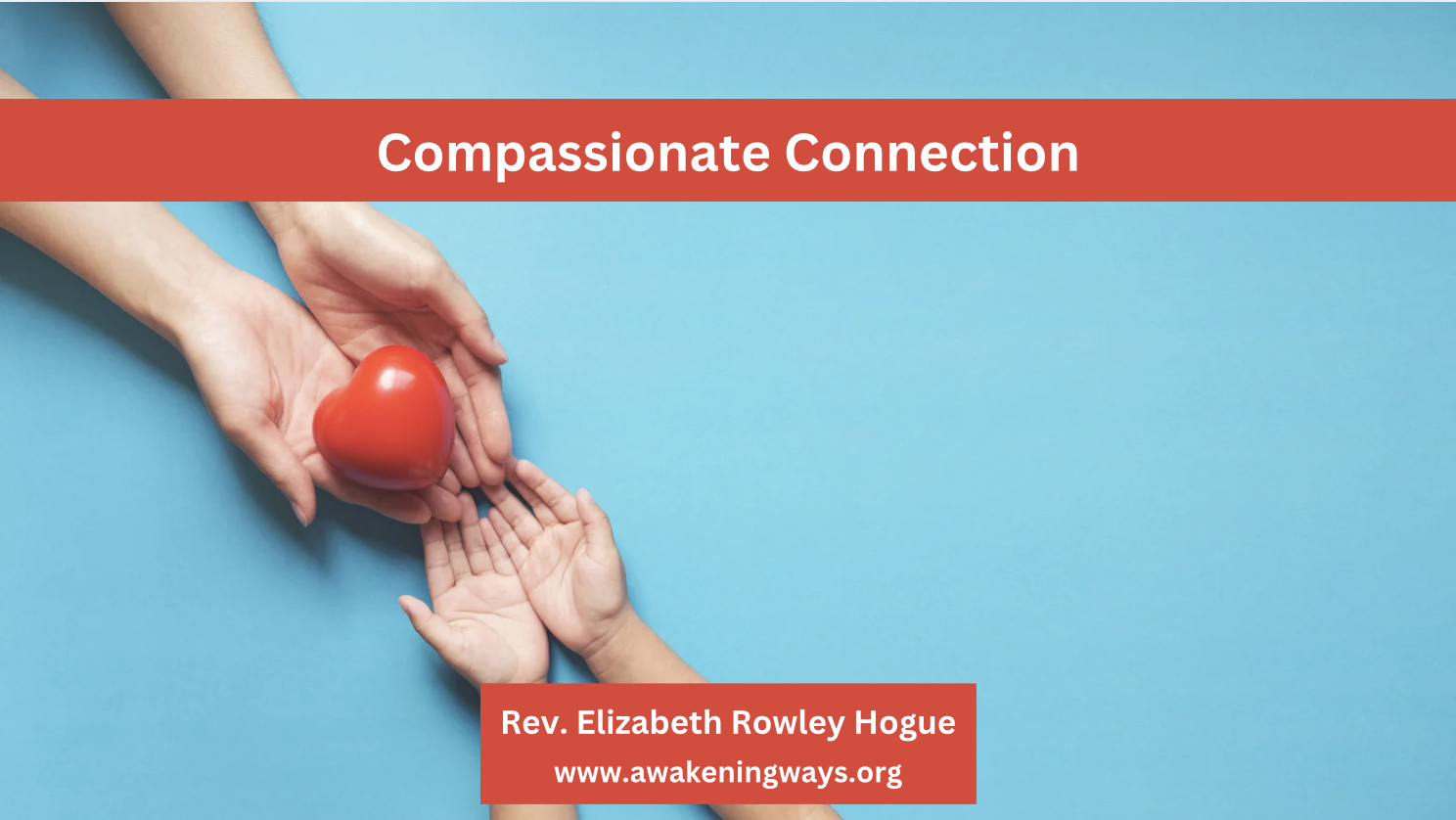
Compassionate Connection
In our fast-paced world, where division often overshadows unity, consider that the essence of authentic relationships lies in compassion, a profound connection with the Divine, and the transformative “touch of the Divine hand.”
Drawing from Ernest Holmes’ teachings in The Science of Mind, compassion isn’t merely a fleeting emotion, but a healing force rooted in love. Holmes, founder of Religious Science, emphasized love as an active power: “I permit love to reach out from me to every person I meet. I believe that love is returned to me from every person I meet.” Though he rarely used the word “compassion” explicitly—likely due to its synonymy with sympathy in his era—his philosophy fosters a kinder world through recognizing the Divine in all.
Genuine compassion transcends sympathy and empathy. Sympathy arises from separation, offering kindness but maintaining distance. Empathy draws closer, allowing us to feel another’s pain, yet our own resentments or judgments can taint it. As Eric Hoffer noted, “Compassion is the antitoxin of the soul: where there is compassion, even the most poisonous impulses remain relatively harmless.” Ken Wilber distinguishes “real compassion” from what he calls “idiot compassion,” urging us to challenge our egos with wisdom, rather than indulging them. Genuine compassion demands spiritual authenticity, cultivated through practices like Tara Brach’s RAIN technique: Recognize, Allow, Investigate, Nurture—a gentle mindfulness tool for self-compassion amid suffering.
At the heart of this is our personal relationship with God, the “Indwelling Presence” Holmes described. God is intimate, an energy of Love that wraps us in safety during fear, tenderness in grief, and wisdom in anger. It’s the warmth of the sun on our face, the breath in our lungs—the Divine One who adores us unconditionally. As spiritual beings amid human messiness, we are called to remember that we are made of peace, love, and joy, even as we grapple with doubt and regret. Beneath it all, Divine perfection guides us.
This redemption is echoed in Myra Brooks Welch’s poem, “The Touch of the Master’s Hand.” A battered violin, deemed worthless at auction, reveals its beauty when a master violinist plays it sweetly. So too, our lives—scarred and undervalued—find worth through God’s touch. Every soul holds intrinsic value; cultivating this Divine relationship unveils hidden purpose and beauty.
In our relationships, can we let compassion flow from self-love, outward kindness, and a Sense of Divine recognition a little more? This week, reflect: What is your relationship with the God of your understanding? Does it feel like love, peace, or strength? Where do you sense its presence the most? In nature, music, a friend’s smile, or elsewhere? Identify your spiritual needs—do you need to know your self-worth, self-love, or have the assurance of a higher power?
Embrace the magic: Through compassion and Divine connection, we transform, creating a gentler world. In doing so, we not only heal ourselves but also uplift those around us, fostering unity within the rich tapestry of diversity. The Divine hand awaits—let it play your melody.
And so it is.